Infertility Clinical Trials at CHR
Infertility Clinical Trials at CHR
CHR is committed to fertility research and education. As a leading fertility center focused with rigorous fertility research program, CHR is always conducting multiple fertility studies. Below are three current clinical trials for which we are actively recruiting participants. For a list of fertility research publications that came out as a result of CHR's research activities, please refer to our publications list.
Dr. Barad on CHR's Research
“Medicine, over time, progresses because somebody has an idea, somebody tries to implement that idea.” says the Center for Human Reproduction's Dr. David H. Barad
2026 Clinical Studies
At the Center for Human Reproduction (CHR), we are proud to announce the launch of our 2026 Clinical Trials, powered by our not-for-profit Foundation for Reproductive Medicine (FRM).
Driven by our commitment to remain at the forefront of reproductive medicine, we are advancing a new generation of highly specialized, innovative clinical trials designed to translate cutting-edge science into real patient care. All of our studies are IRB-approved, fully registered, and grounded in the latest evidence-based advances in translational ART, ensuring both ethical and scientific rigor. Most importantly, these protocols are actively integrated into our clinical practice today, giving patients direct access to some of the most advanced fertility treatments available anywhere.
At CHR, innovation is care.
More about our current clinical research:
Our current research portfolio represents the forefront of translational ART, moving the latest scientific discoveries directly into the clinic to help our patients achieve their dreams of parenthood.
From investigating biologic treatments to enhance antral follicle counts and ovarian response in women with diminished ovarian reserve, to exploring the role of molecular pathways (such as mTOR inhibition with sirolimus) for improving oocyte quality, our trials target the most challenging cases in reproductive medicine. We are also looking at the bigger picture of reproductive health by integrating hereditary cancer gene screening into routine pre-IVF evaluations and addressing male factor infertility through the MENPAT dietary supplement study.
Every protocol we conduct is IRB-approved and evidence-based, ensuring the highest levels of safety and scientific integrity. At he CHR, our patients aren’t just receiving standard care; they are benefiting from a clinical environment where pioneering innovation is the standard.
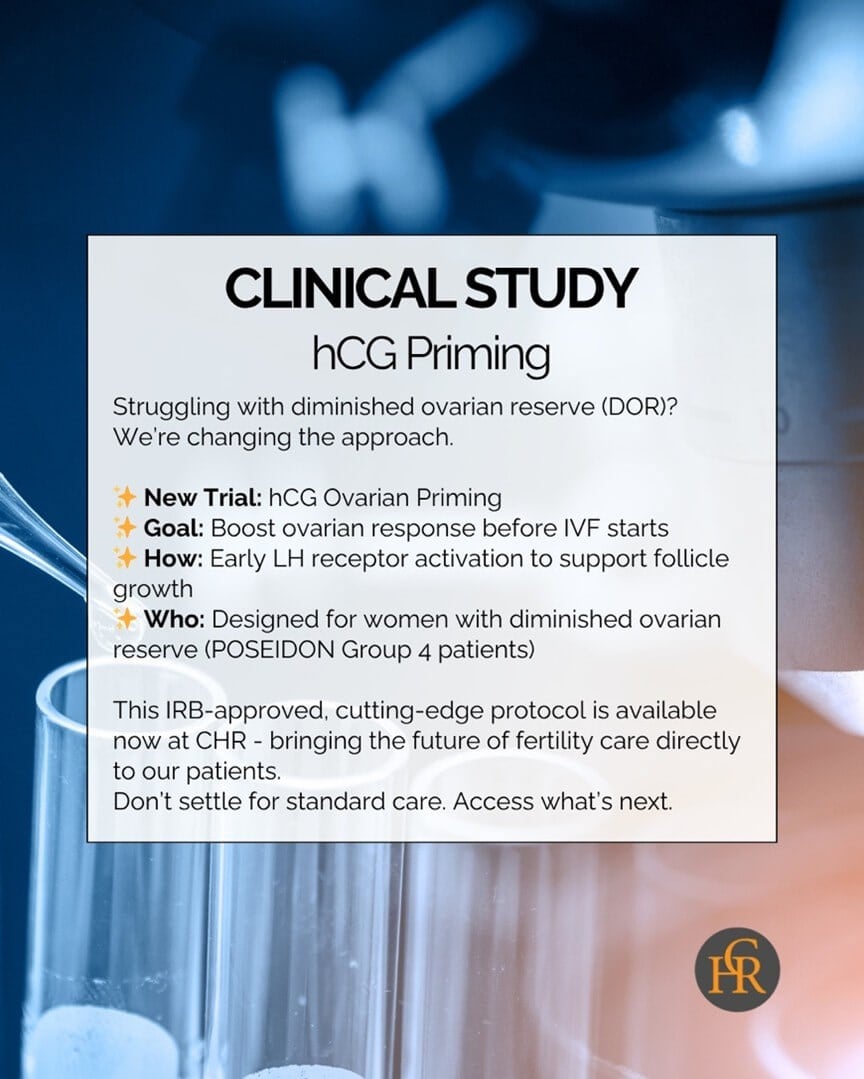
Project 1: hCG Ovarian Priming in Women with DOR
Improving IVF Outcomes in Women with Diminished Ovarian Reserve
Objective
To evaluate whether pretreatment with low-dose hCG improves ovarian
response and IVF outcomes in women with diminished ovarian reserve
(DOR). This protocol leverages early LH receptor
activation to support follicular development at the preantral
and small antral stages, phases traditionally considered
gonadotropin-independent.
Clinical Impact
This study specifically targets one of the most challenging patient
populations: POSEIDON Group 4 (age =35 with low AMH and
elevated FSH). By extending LH activity for up to four weeks prior to
ovarian stimulation, the protocol aims to enhance follicular recruitment
and increase the number of mature (MII) oocytes retrieved, ultimately
improving embryo yield and quality.
Why It Matters
Conventional stimulation strategies often yield limited success in women
with a reduced follicular pool. This double-blinded,
IRB-approved randomized controlled trial explores a safe,
evidence-based approach to improve ovarian responsiveness. By
integrating this protocol directly into clinical care, CHR is offering
patients access to a novel strategy designed to expand treatment
possibilities and improve reproductive outcomes in a population with
historically limited options.
Project 2: G-CSF Ovarian Priming for DOR
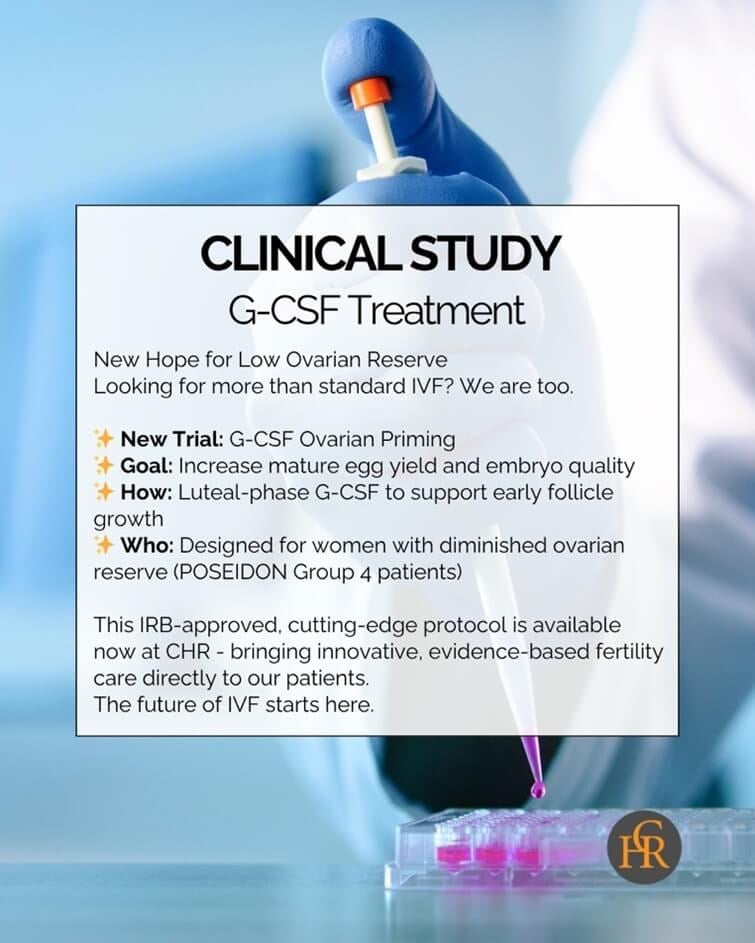
Enhancing Oocyte Yield through Targeted Ovarian Rejuvenation
Objective
To evaluate the efficacy of Granulocyte Colony-Stimulating
Factor (G-CSF) in improving oocyte yield and embryo quality in
patients with diminished ovarian reserve (DOR). This study investigates
whether luteal-phase administration of G-CSF can enhance early
follicular recruitment and optimize ovarian readiness for
the subsequent IVF cycle.
Clinical Impact
This randomized controlled trial focuses on POSEIDON Group 4
patients (ages 35–44 with low AMH and elevated FSH), a
population with historically limited therapeutic options. Using a
defined regimen of five subcutaneous doses of 300 µg G-CSF administered
every other day during the early luteal phase, the protocol aims to
stimulate preantral follicle development and improve ovarian
microenvironment through enhanced angiogenesis.
Why It Matters
While G-CSF has long been utilized in reproductive medicine for
endometrial support, emerging data suggest a novel role
in ovarian function modulation, including reduced
follicular atresia and potential improvements in ovarian reserve
markers. This IRB-approved randomized controlled
trial is designed to generate robust clinical evidence
supporting G-CSF as a safe and effective strategy to increase mature
oocyte yield and improve IVF outcomes in patients with severe DOR. By
integrating this protocol into active clinical care, CHR continues to
expand therapeutic possibilities for patients facing the most
challenging fertility diagnoses.
Project 3: Sirolimus (Rapamycin) Priming to Improve Oocyte Quality
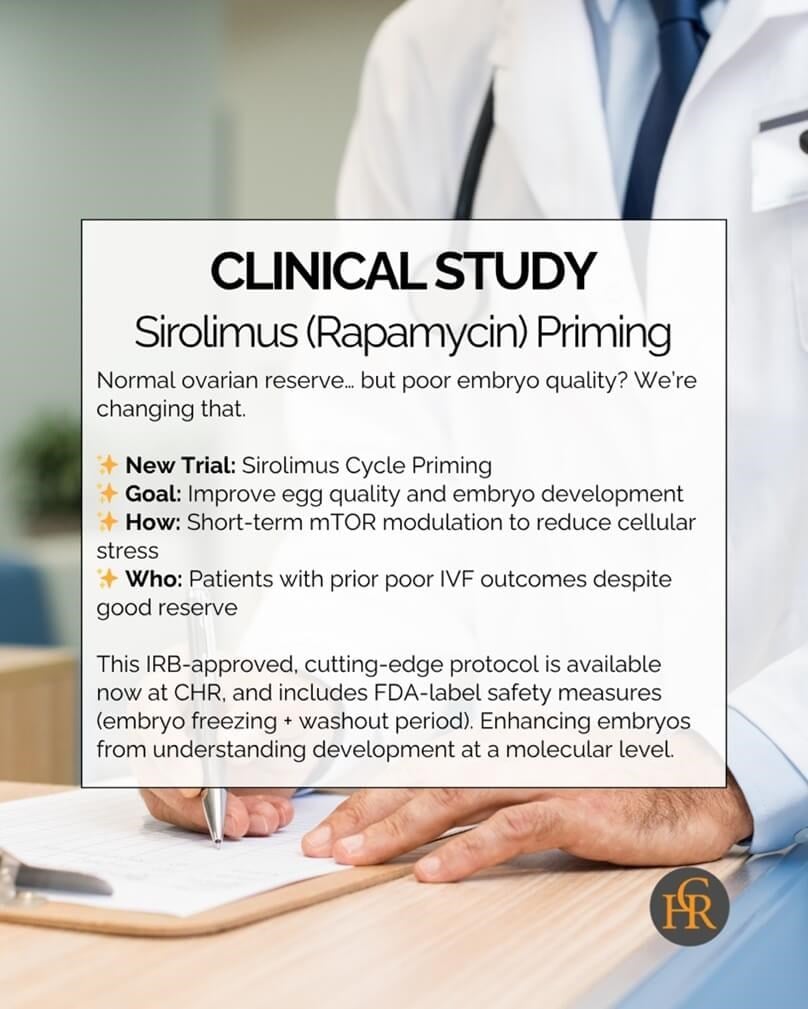
Enhancing Oocyte Competence through Targeted mTOR Modulation
Objective
To investigate whether short-term cycle priming
with Sirolimus, a potent mTORC1 inhibitor, can
favorably modulate the follicular microenvironment, reduce oxidative
stress, and improve oocyte developmental competence.
Clinical Impact
This study addresses a critical and often underrecognized barrier to IVF
success: poor oocyte quality in patients with otherwise normal
ovarian reserve (AMH =1.1 ng/mL). By targeting the mTOR
pathway, a central regulator of cellular metabolism and aging,
this protocol aims to improve oocyte competence, enhance embryo
morphology, and restore “responder” status in patients with prior cycles
characterized by low maturity rates, poor fertilization, or suboptimal
embryo development.
Why It Matters
Dysregulated mTOR signaling has been strongly implicated in ovarian
aging, oxidative stress, and cellular senescence. This pioneering trial
evaluates a short-term, low-dose Sirolimus priming strategy (10
days) to optimize the follicular environment prior to ovarian
stimulation. Given the mechanism of action, patient
safety remains paramount: the protocol incorporates mandatory
embryo cryopreservation and a 12-week washout period prior to
transfer according to the current FDA label. By
combining cutting-edge molecular science with rigorous clinical
safeguards, CHR continues to advance precision reproductive medicine for
atients facing complex, quality-driven infertility challenges.
Project 4: MENPAT Dietary Supplement for Male Infertility
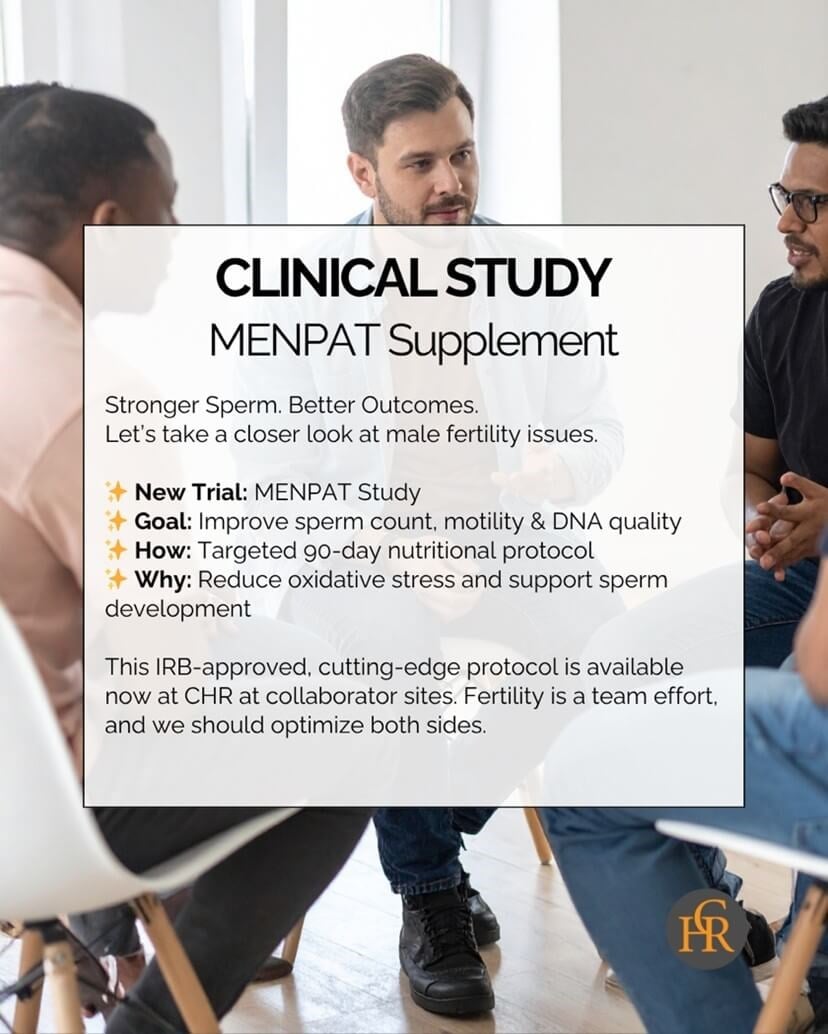
Optimizing Male Fertility through Targeted Nutritional Intervention
Objective
This multicenter pilot trial (N=50) evaluates the impact of
the MENPAT dietary supplement on conventional semen
parameters and sperm DNA integrity in men diagnosed
with oligo-astheno-teratozoospermia (OAT).
Clinical Impact
The study investigates a structured 3-capsule daily regimen
administered over a minimum of 90 days, corresponding to a full
cycle of spermatogenesis. Outcomes include quantitative changes in sperm
concentration, motility, and morphology, as well as assessment of
the Sperm DNA Fragmentation Index (DFI) at the
affiliate sites. This protocol offers a non-invasive, evidence-based
strategy to enhance male reproductive potential, particularly in cases
of idiopathic infertility.
Why It Matters
Male factor infertility contributes to up to 50% of all
infertility cases, with oxidative stress recognized as a
central underlying mechanism. Standard semen analysis alone may not
fully reflect reproductive competence, making the evaluation
of DNA integrity increasingly critical. The MENPAT
formulation combines targeted antioxidants, B-complex vitamins, and key
amino
acids, including L-carnitine and N-acetylcysteine, to
reduce oxidative damage and support mitochondrial function. By
integrating advanced nutritional science into clinical care, CHR aims to
optimize the male contribution to reproductive success and improve
overall IVF outcomes.
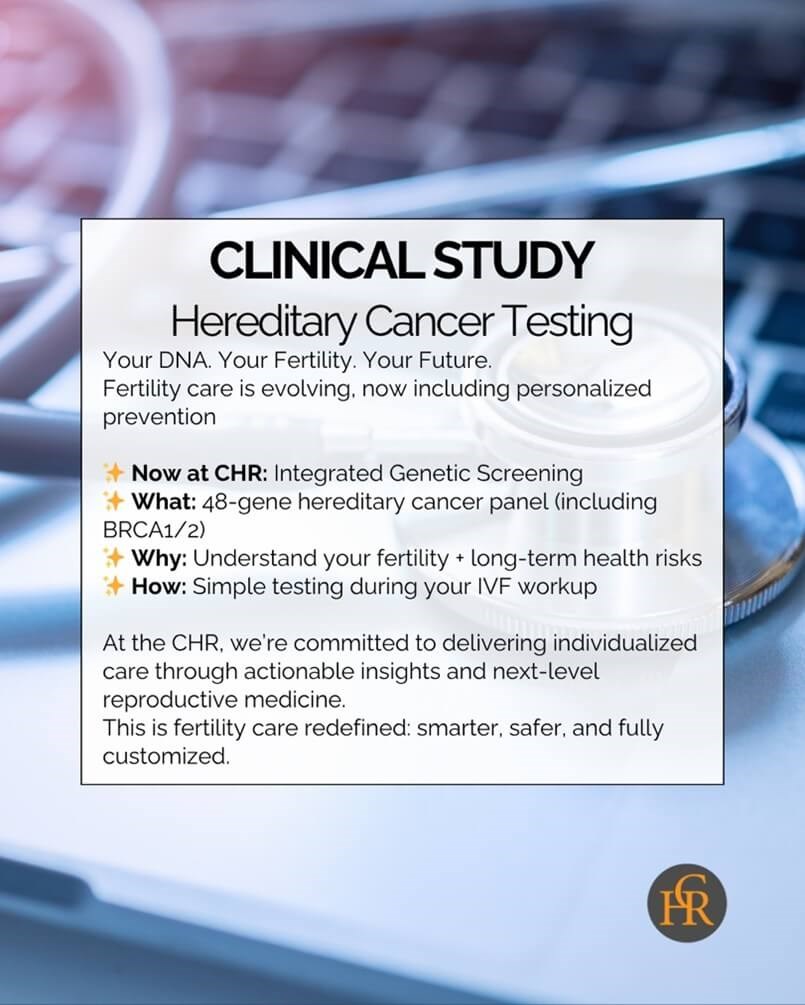
Project 5: Hereditary cancer genetic screening into IVF care
Transforming Reproductive Care through Integrated Precision Medicine
Objective
To incorporate hereditary cancer genetic screening into
routine pre-IVF evaluation in order to enhance patient risk
stratification, personalize reproductive care, and investigate the
relationship between cancer-predisposition genes and diminished ovarian
reserve (DOR).
Clinical Impact
Utilizing a CLIA-certified hereditary cancer gene
panel, including BRCA1/2 and other high-risk
mutations, this program expands the traditional fertility workup into a
comprehensive health assessment. Identification of pathogenic variants
enables personalized counseling, more accurate
reproductive prognostication, and coordinated long-term care. Results
are systematically reviewed within routine clinical visits and
integrated into a multidisciplinary care pathway,
ensuring timely referral for genetic counseling and appropriate
oncologic surveillance when indicated.
Why It Matters
Emerging evidence suggests that certain cancer-predisposition genes may
play a direct role in accelerated follicular depletion and
reduced reproductive potential. By proactively identifying
these risks, this initiative bridges reproductive medicine with
preventive health. It empowers patients with clinically
actionable insights that inform both immediate fertility
decisions and long-term health planning. Through this integration, CHR
advances a higher standard of care, one that aligns precision
reproductive medicine with comprehensive, lifelong patient
well-being.
Currently Ongoing Clinical Trials
Clinical trials listed in this section are currently ongoing, and may be recruiting participants, although some trials are open by invitation only.
Clinical Trial NCT04278313: Ovarian Function Following Intraovarian Injection of PRP (PRP4POA)
As women age oocytes are gradually depleted with a consequent progressive loss of ovarian function and fertility. When a woman's follicle cohort falls below a critical level, she enters a transitional time of diminished ovarian reserve known as ovarian aging. Recently the use of autologous platelet-rich plasma (A-PRP) has been proposed as an additional strategy for improving ovarian function. A-PRP is prepared from autologous blood using an FDA approved device. The rationale for the use of PRP is that it contains growth factors which stimulate cellular anabolism, inflammatory modulators that create an anti-inflammatory effect and fibrinogen which acts as a scaffold for regenerating tissue. The investigators hypothesize that the growth factors present in PRP may have a beneficial effect promoting growth and recruitment of antral follicles. The investigators will recruit a prospective cohort of 90 patients with evidence of Premature Ovarian Aging/DOR. Women invited to participate in this RCT will have FSH above 12 and AMH below 1.0 ng/mL respectively and will have had fewer than 6 oocytes retrieved in a previous ovulation attempt. Consenting participants in this trial will be randomized in a doubly blind fashion to two groups. One will receive Platelet Rich Plasma (PRP) and the other will receive Platelet Poor Plasma (PPP). Women assigned to PPP will be offered PRP in a future cycle if they so desire.
Closed Clinical Trials
Clinical trials listed in this section has been completed or closed. Results for completed studies will be published on a timely basis.
DHEA and Premature Ovarian Aging
Clinical Trial NCT00650754: The experimental focus of the project was on the interaction of DHEA treatment on pregnancy in women with otherwise unexplained infertility and evidence of premature ovarian aging (POA). Participants were randomized into tow groups, one receiving dehydroepiandrosterone (DHEA) supplementation and the other receiving placebo.
This study has been completed. More information about using DHEA in IVF for women with diminished ovarian reserve is available on the DHEA page.
Comparison of the Embryoscope Time-Lapse System with Standard Embryo Culture: an Open Labbel Randomized Clinical Trial
Clinical Trial NCT02246309: This trial randomized 120 patients (60 in each arm) to standard embryo culture or to culture in an embryoscope, a closed embryo incubation system with ability to take time-lapse photography. The primary endpoint was a comparison of time spent by the laboratory personnel with each system. Secondary endpoints was IVF outcomes. This study has been completed. Watch Dr. Gleicher explain the results of this trial
Effect of G-CSF on Poor Endometrial Development During IVF
Clinical Trial NCT01202643:
The purpose of this study is to investigate the effect of G-CSF on endometrial thickness in women who have failed reaching minimal endometrial thickness by standard treatments, to assess how many reach embryo transfer and what implantation and pregnancy rates are in comparison to control patients. The study will be conducted in women undergoing transfer of previously cryopreserved embryos or undergoing transfer of embryos from donor eggs. This invitations-only G-CSF study has been completed.
Effect of G-CSF on Thin Endometrium
Clinical Trial NCT01202656: This is a trial designed to test whether granulocyte colony stimulating factor (G-CSF, Neupogen) can increase the rate of embryo implantation following IVF and embryo transfer. Preliminary data at CHR and elsewhere suggest that intrauterine infusion of G-CSF can improve endometrial development and can increase implantation rates of embryos. More detailed information is available on the thin endometrium study page. This study has been completed.
DHEA Treatment and Premature Ovarian Failure (POF)
Clinical Trial NCT00948857: This clinical trial is designed to evaluate whether supplementation with DHEA for 3 months improves spontaneous pregnancy rates in patients with premature ovarian failure (POF). His study has been discontinued due to lack of recruitment.
Clinical Trial NCT02179255: Open-Label Randomized Trial of Human Growth Hormone (HGH) for Enhancement of Ovulation Induction in Association with In Vitro Fertilization (IVF)
The purpose of this study is to determine whether administering human growth hormone during the early stages of follicle development improves ovarian response to stimulation with gonadotropins. Participation to this study will be offered to patients who have previously failed to respond to ovarian stimulation while on DHEA supplementation, or demonstrated less than 2 eggs after ovarian stimulation with DHEA.
Clinical Trial NCT01662466: Effect of Testosterone Supplementation vs Placebo on Embryo Quality among Women with Diminished Ovarian Reserve Undergoing IVF
The purpose of this study is to determine the effect of treatment with trans-dermal testosterone cream compared to placebo on measures of ovarian reserve, oocyte and embryo quality, and pregnancy rates among women with evidence of diminished ovarian reserve that have persistently low serum testosterone and free testosterone after completing six previous weeks of DHEA supplementation.